Authors: Miriam Lep, Klara Plesingrova, Jiri Sedmik, Sona Cesnarikova, Monica Feole, Ondrej Bernatik, Victorio Martin Pozo Devoto, Hana Hribkova, Katerina Amruz Cerna, Petr Fojtik, Nadezda Vaskovicova, Simona Bartova, Veronika Pospisilova, Tereza Vanova, Olav Michael Andersen, Dasa Bohaciakova, and Jan Raska
Alzheimer's & Dementia, 22 August 2026
MEA recordings reveal neuronal hyperexcitability in human SORL1-mutant neurons, linking disrupted endosomal trafficking to functional changes in Alzheimer’s disease models.
SORL1 is a major genetic contributor to Alzheimer’s disease, but the functional consequences of specific patient-associated variants in human neurons remain poorly understood. In this study, researchers used isogenic human iPSC-derived neurons and 3D cerebral organoids carrying either the SORL1 p.Y1816C variant or a SORL1 knockout to investigate how SORLA dysfunction affects amyloid precursor protein trafficking, axonal transport, and neuronal function.
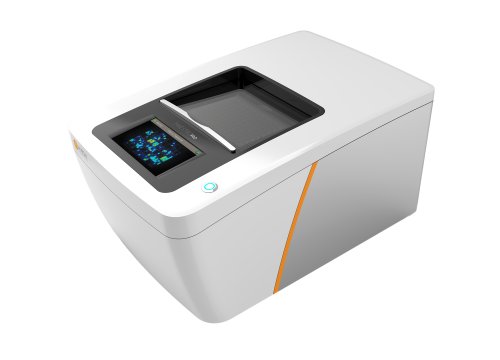
The p.Y1816C variant impaired SORLA maturation and shedding and, together with SORL1 loss, caused enlarged early endosomes, APP retention, increased amyloid-β secretion, axonal swellings, and disrupted transport of APP and Rab5-positive endosomes. Using Axion BioSystems’ Maestro MEA platform, the team longitudinally recorded spontaneous neuronal activity over eight weeks and found elevated firing rates, more active and bursting electrodes, and increased network synchrony in SORL1-mutant and knockout neurons.
These findings extend the role of SORLA beyond amyloid processing, showing that SORL1 dysfunction disrupts axonal trafficking and neuronal network function as well. The authors propose that endosomal transport defects may represent an early, upstream mechanism contributing to Alzheimer’s disease pathology.