Authors: Daniel A. Nash, Henry G. Barrow, P. Robin Antrobus, Alex S. Nicholson, John Suberu, Harvey E. Johnston, Martin Potts, Marta A. Almeida, Valeria Lulla, Colin M. Crump, Anton J. Enright, Michael P. Weekes, Janet E. Deane, and Stephen C. Graham
Science Advances, 21 October 2026
MEA recordings demonstrate that a single HSV-1 protein can silence human neuronal networks, linking viral disruption of ion channels to loss of electrical function.
Herpes simplex virus 1 (HSV-1) can cause encephalitis, but the molecular processes through which it disrupts human neuronal function remain incompletely understood. Researchers studied HSV-1 infection in human iPSC-derived cortical glutamatergic neurons using transcriptomic, proteomic, and cell-surface protein analyses. They identified extensive remodeling of the neuronal plasma membrane, including loss of voltage-gated sodium, potassium, and calcium channels, and implicated the viral protein pUL56 as a key driver of these changes.
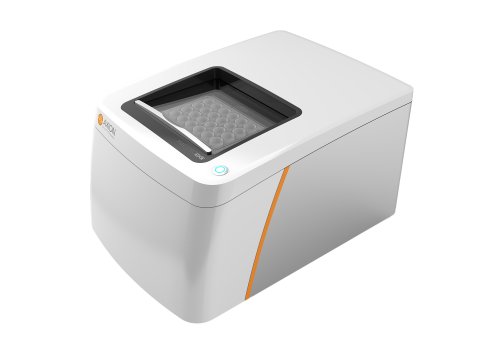
Using the Axion MEA system, the team tracked electrical activity in neurons engineered to express pUL56 or a mutated version of the protein. Expression of pUL56 alone, without other viral genes, abolished spiking, bursting, and network synchrony. Mutating the protein’s ubiquitin-ligase-binding motifs partially restored electrical activity, providing functional evidence that these motifs are important for neuronal silencing.
Complementary calcium imaging showed that deleting pUL56 from the virus or mutating these binding motifs preserved synchronous calcium signaling during infection. Proteolysis inhibitors also restored the abundance of several ion channels in infected neurons. Together, the findings identify pUL56 as a potent suppressor of neuronal excitability and support a mechanism involving ion-channel degradation. The study connects molecular changes at the neuronal surface with loss of network function, providing a basis for further investigation of HSV-1-associated neurological dysfunction.
Related Products