Authors: Haishuang Lin, Yaqing Wang, Hu Du, Yuxin Qin, Haoyu Zhang, Peng Wang, Lin Wei, and Jianhua Qin
Advanced Science, 29 September 2026
MEA recordings provide functional evidence of neuronal maturation in cerebral organoids engineered to include vascular and immune components.
Human brain organoids offer a way to study development and disease, but many models lack the vascular and immune cells that help shape brain function. Researchers used genetic code expansion to control expression of ETV2, a regulator of endothelial differentiation, in human pluripotent stem cells. The approach generated cerebral organoids containing vascular networks and microglia-like cells alongside neural populations, with structural and functional features of the blood–brain barrier.
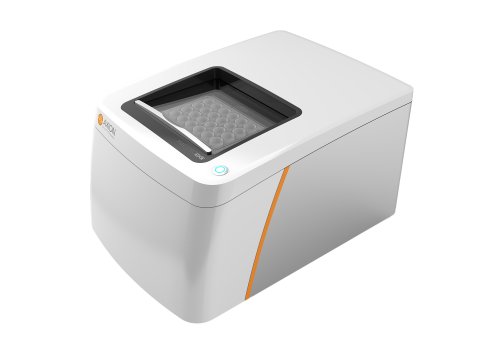
Using Axion MEA, the team assessed spontaneous electrical activity in 90-day organoids. Compared with conventional cerebral organoids, the vascularized organoids exhibited higher firing rates and longer network bursts. These functional measurements complemented molecular and cellular analyses, supporting enhanced neuronal maturation in a model that incorporates vascular and immune components.
The organoids also formed perfused vascular connections after transplantation into mice. In separate Zika virus experiments, infection damaged vascular networks, disrupted neural development, and impaired microglia-like cell development. Together, the findings establish a human multicellular model for investigating interactions among neural, vascular, and immune populations during brain development and virus-induced disease.
Related Products