Authors: Adam Pavlinek, Sara Guerrisi, Kara O’Driscoll, Lucia Dutan Polit, Roland Nagy, Madeline A. Lancaster, Anthony C. Vernon, and Deepak P. Srivastava
Cell Reports Methods, 27 March 2026
Maestro MEA enables scalable, longitudinal analysis of network development in organoid-derived neuronal cultures.
Brain organoids provide a promising platform for modeling human neurodevelopment, but variability across batches, cell lines, and experimental conditions presents challenges for reproducibility and scale. In this study, researchers establish a standardized, scalable framework for longitudinal analysis of organoid-derived neuronal cultures, enabling systematic evaluation of network development over time.
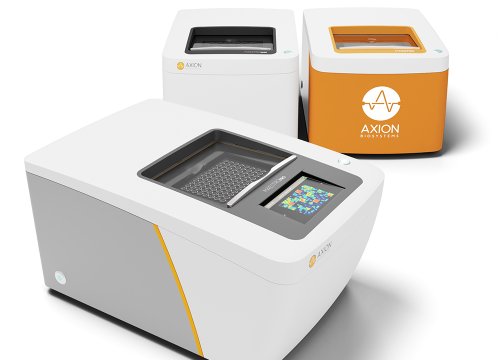
Using Axion BioSystems’ Maestro MEA platform, the team performed high-throughput electrophysiological recordings across multiple organoid batches and donor lines. They show that dissociated organoid cultures exhibit progressive maturation of network activity, while also demonstrating how factors such as batch effects, donor variability, and chromosomal sex influence functional readouts.
This work provides a practical foundation for designing robust MEA-based studies using organoid-derived neurons, supporting more consistent interpretation of results in disease modeling and drug discovery.