Study disease mechanisms, neural network phenotypes, and therapeutic response in human-relevant in vitro neural models.
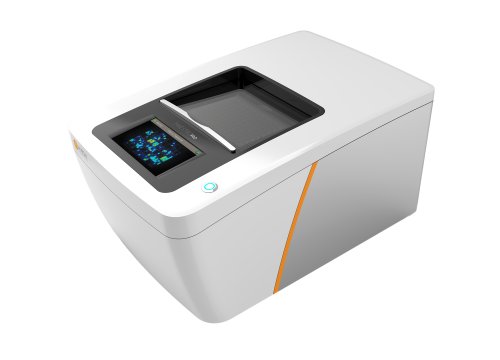
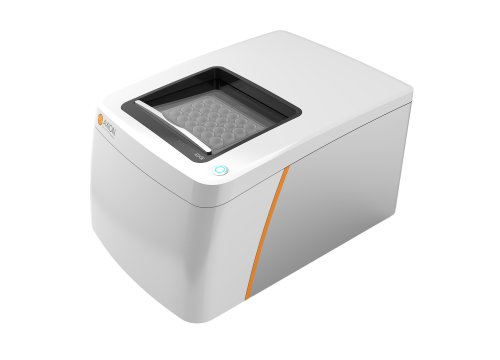
Human iPSC-derived neurons and advanced neural cultures enable researchers to model disease-associated changes in neural function in a controlled in vitro system. Maestro MEA provides longitudinal, label-free measurement of neuronal activity and network behavior, helping researchers connect molecular or genetic changes with functional phenotypes.
Advantages of MEA for in vitro models of neural disease
MEA provides longitudinal, label-free functional measurements that help researchers characterize disease-associated neural phenotypes and evaluate therapeutic response in human-relevant in vitro models.
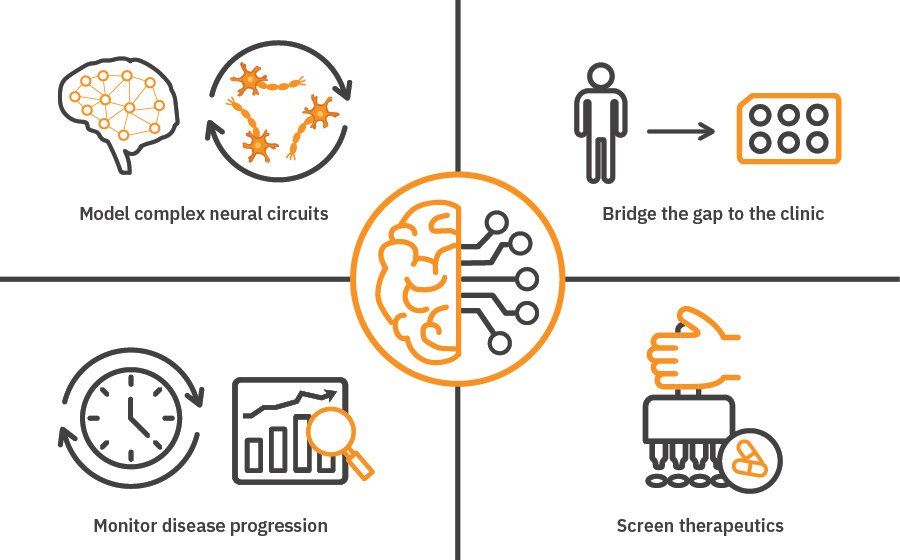
Model complex neural circuits — Study network-level function in iPSC-derived cultures, cocultures, and organoids.
Connect genotype and phenotype — Determine how disease-associated changes affect neuronal and network activity.
Track functional phenotypes — Follow disease-model behavior longitudinally in the same cultures.
Evaluate therapeutic response — Test whether candidate interventions modify or rescue functional phenotypes.
Research questions MEA can help answer
Does the disease model develop a functional phenotype?
Compare neural activity between disease, control, and isogenic cell lines.
When does the phenotype emerge?
Use longitudinal recordings to determine when functional differences appear during neural maturation.
How does the network phenotype change over time?
Track whether disease-associated activity becomes more pronounced, stabilizes, or changes with culture age.
Can a candidate treatment modify the phenotype?
Evaluate whether compounds or other interventions shift functional activity toward a control-like state.
Explore more neural disease examples:

Alzheimer’s disease
Investigate disease-associated changes in neuronal activity, network function, and progression in in vitro neural models.
Explore Alzheimer's Disease Models >>

Amyotrophic lateral sclerosis
Characterize functional phenotypes in human iPSC-derived motor neuron and cortical neuron disease models and evaluate therapeutic response.
Explore ALS Models >>

Autism spectrum disorder
Study changes in neural network development, synchrony, and excitation-inhibition balance in human-derived models.
Explore Autism Models >>

Epilepsy
Characterize disease-associated hyperexcitability and abnormal network activity in in vitro neural models.
Explore Epilepsy Models >>

Glioma and neural tumor models
Investigate interactions between neural activity, glial biology, and tumor-associated models in vitro.
Explore Glioma Research >>

Parkinson’s disease
Measure functional maturation and network phenotypes in human iPSC-derived dopaminergic neuron models.
Explore Parkinson's Disease Models >>
What MEA measures in neural disease models
MEA records functional neural activity over time, providing quantitative endpoints that can reveal differences between disease and control models.
Firing activity: Measure spontaneous neuronal firing and changes in overall activity.
Bursting: Quantify periods of rapid, repeated neuronal firing.
Network bursts: Assess coordinated activity across the neural network.
Synchrony: Measure how consistently neurons fire together across the culture.
Oscillatory activity: Characterize repeating patterns of network activity that may reflect changes in network organization.
Featured Resources for in vitro Neural Disease Modeling Assays
Explore practical guidance and application data for functionally characterizing human neural disease models with MEA.
Application Note
Neural Activity Assay
Learn how MEA measurements of activity, bursting, and network behavior can be used to characterize functional neural phenotypes.
Application Note
Best Practices for In Vitro Neural Assays on the Maestro MEA System
Review factors such as cell density, culture duration, recording conditions, and analysis parameters that influence neural assay performance.
Technical Resource
Neural Metric Definitions
Explore the electrophysiological metrics used to quantify firing, bursting, synchrony, and network activity.
Looking for additional methods or applications?
Frequently asked questions about in vitro neural disease MEA assays
Yes. Human iPSC-derived neurons can be cultured on multiwell MEA plates and recorded repeatedly as neural networks develop.
MEA has been used to characterize functional phenotypes in models of Parkinson’s disease, ALS, epilepsy, autism, and other neurological and neurodevelopmental disorders.
Common endpoints include firing rate, burst activity, network bursting, synchrony, active electrodes, and other measures of neural-network organization.
The appropriate metrics depend on the model and the biological question.
Gene-expression and imaging assays provide important information about cell identity, structure, and molecular pathways.
Functional electrophysiology reveals whether those molecular or structural differences translate into altered neuronal or network behavior.
In some disease models, yes.
For example, MEA identified delayed functional maturation in Parkinson’s disease-derived dopaminergic neurons compared with neurons from an unaffected monozygotic twin.
Yes. Once a reproducible disease-associated functional phenotype is established, compounds or other interventions can be evaluated for their ability to modify or rescue that phenotype.
Yes. MEA recording is noninvasive, enabling repeated measurements from the same cultures over days or weeks.
This is useful for studying disease progression, developmental trajectories, and treatment response.
No. Axion BioSystems platforms and application data are for research use only and are not intended for diagnosis, treatment, or other clinical use.
For Research Use Only. Not for use in diagnostic procedures.